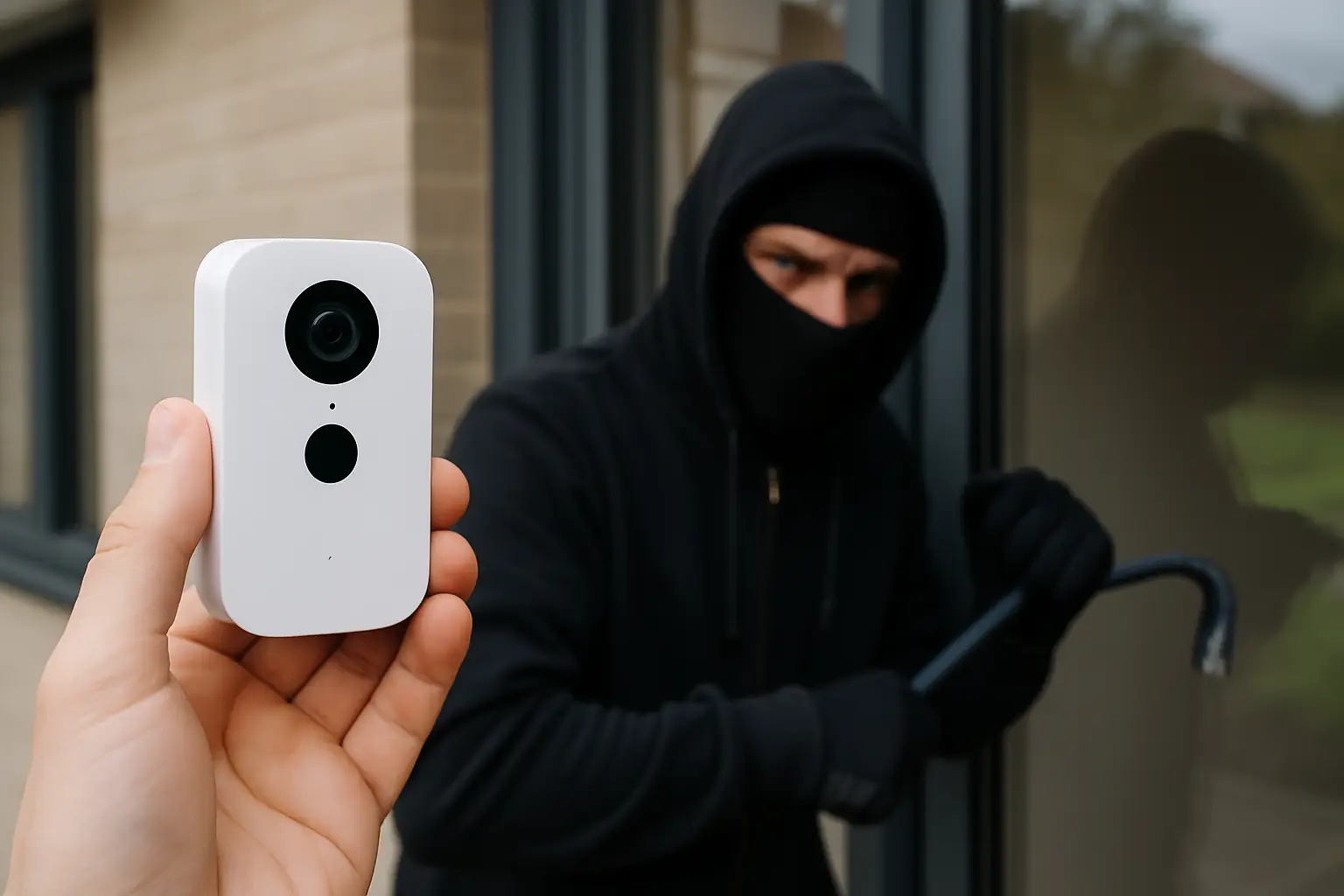
A lot of theft isn’t dramatic. It’s a quick walk up a driveway, a few seconds at an unlocked side gate, or a package lifted off a porch by someone who knows you’re at work. The best setups don’t rely on luck or a single gadget - they reduce opportunity, improve visibility, and give you proof when something happens.
If you’re looking for the best home security solutions for theft, think in layers. Each layer does a different job: deter, detect, document, and respond. The right mix depends on your home layout, the way people approach your property, and what you actually need to protect.
The theft threats most homes actually face
Most Sacramento-area homeowners we talk to aren’t worried about a movie-style break-in. They’re worried about practical problems: porch theft, garage and tool theft, side-yard access, catalytic converter theft in the driveway, and someone checking car doors at night.
That matters because the “best” security solution changes with the scenario. A doorbell camera can help with packages, but it won’t cover a side gate. A basic alarm can alert you to a forced entry, but it won’t give you a usable face shot if the intruder never goes through a door.
The goal is to make your home feel risky to target and easy to identify afterward. That starts outside.
Best home security solutions for theft: start with the perimeter
Lighting that removes hiding places
Good lighting is one of the cheapest theft deterrents, and it works best when it’s intentional. Motion lighting at the driveway and side yard is more useful than one bright light over the front door, because thieves often avoid the obvious approach.
There’s a trade-off: ultra-sensitive motion lights can trigger constantly with pets, trees, or passing cars, which trains you to ignore them. The fix is placement and aiming, not just buying a “brighter” fixture.
Locks and entry points that don’t give easy wins
Most theft isn’t a battle of strength. It’s an easy opening someone noticed. If your side gate latch can be lifted from outside, or your garage service door has a basic builder-grade knob, you’re giving away a shortcut.
Reinforced strike plates, quality deadbolts, and solid door hardware still matter. Smart locks are convenient, but they’re not automatically more secure than a good mechanical lock. What they do well is reduce the “I forgot to lock it” problem and give you audit trails and temporary codes.
Landscaping that supports visibility
You don’t need to strip your yard bare. You do want to avoid tall shrubs right under front windows and dark corners near gates. A clear sightline from the street and from your own windows makes “checking doors” feel exposed.
Cameras: deterrence plus evidence (when installed correctly)
Security cameras are one of the strongest theft solutions because they can deter and document at the same time. But cameras only help when they actually capture usable details.
Why 4K matters for theft
When someone says, “I have cameras,” what they often have is footage that looks fine until you need it. At that point, the face is a blur, the license plate can’t be read, and the angle shows the top of a hat.
4K camera systems give you more pixels to work with, which increases the chance of identifying a person or vehicle. That doesn’t mean every camera needs to be 4K, but your most important views should be.
Camera placement: coverage beats quantity
Four well-placed cameras can outperform eight randomly mounted ones. Theft coverage usually needs three categories:
First, a wide overview that shows the whole scene, so you understand what happened and where someone came from. Second, a close-up angle at face height where a person naturally looks up (near a walkway, gate, or door). Third, a vehicle view that watches the driveway or street approach.
Common mistakes we see include mounting too high (great for seeing heads, not faces), aiming into direct sunlight (washed-out footage), and ignoring the side yard entirely.
NVR systems vs cloud cameras
For theft, local recording through an NVR (network video recorder) is often the most dependable option. It records continuously, keeps higher-quality video, and doesn’t depend on a perfect Wi‑Fi connection.
Cloud cameras can be a good fit for smaller needs or renters because they’re easy to start with and offer offsite storage. The trade-off is that many rely on motion events and can miss critical seconds, or degrade video quality to save bandwidth. Also, if your internet drops, cloud cameras may stop recording.
A hybrid approach can work too: an NVR system for reliable recording, plus cloud access for quick sharing and remote viewing.
Remote access that people actually use
Remote access is only helpful if it’s simple. The most effective systems let you pull up live views quickly, scrub through recorded footage without guessing, and share a clip with law enforcement or a neighbor in a couple of taps.
If your current app is confusing, it’s not a “you” problem. It usually means the system wasn’t designed around the way you live. Ease of use is security, because you’re more likely to check cameras, respond to alerts, and adjust habits.
Alarm systems: detection and response when you’re not home
Cameras document. Alarms interrupt.
A well-designed alarm system can do two things cameras can’t do alone: make noise (which changes behavior) and notify you immediately. For theft prevention, door and window sensors are basic but effective, especially on garage doors and any door that isn’t in your daily line of sight.
If you’re deciding between self-monitoring and professional monitoring, it depends on your schedule and how you handle alerts. Self-monitoring is fine for people who can reliably respond. Professional monitoring can help if you travel, work long shifts, or simply don’t want the burden of deciding whether every notification is real.
The trade-off is false alarms. The best alarm setups reduce them through correct sensor placement, sane notification settings, and a quick routine your household follows.
Doorbells and porch theft: helpful, but don’t over-trust them
Video doorbells are popular for a reason: they’re easy to install and they cover the most obvious approach. They can deter casual package theft and help you communicate with delivery drivers.
But porch thieves adapt. Many cover their face, approach from the side, or move fast enough that a single angle doesn’t capture much detail. If packages are your main issue, consider adding a second camera that covers the porch from the corner of the house, plus better lighting.
Also consider changing the “opportunity” itself: delivery notes, a lockable parcel box, or holding packages at a pickup location for high-value items.
The garage: the theft magnet most homes under-protect
Garages are frequently targeted because they often contain tools, bikes, and easy access into the home. The best theft protection here is a combination of:
A camera that clearly shows the garage door and driveway, a sensor on the overhead door, and lighting that triggers when someone enters the driveway. If you have an interior door from garage to house, treat it like an exterior door - solid core, good deadbolt, reinforced strike plate.
If you store expensive items, add a camera inside the garage. Interior cameras raise privacy questions for some families, so placement matters. Aiming it at the garage door and tool area (not toward the house door) can provide coverage without feeling intrusive.
Signs, stickers, and “security theater”
Visible deterrence has value, but only when it matches real capability. A yard sign can make a thief pick a different house, but it won’t help you identify anyone afterward.
If you’re going to use signage, pair it with lighting and at least basic camera coverage. Otherwise it’s more about feeling protected than being protected.
DIY vs professional installation: where the difference shows up
DIY systems are better than doing nothing, and for some homes they’re enough. The problems appear in the details: Wi‑Fi dead zones, camera angles that miss faces, cables run in exposed areas, recorders placed where they can be stolen, and settings that cause missed motion events.
Professional design and installation matters most when your property has side access, detached structures, long driveways, or specific coverage goals like reading plates at night. A pro also helps you avoid buying the wrong mix of cameras - for example, using a wide-angle camera where you really need a tighter view for identification.
If you want a local team that designs around your layout and walks you through how to use the system after it’s installed, StaySafe365 focuses on clean 4K camera installations with reliable NVR recording and straightforward remote access for Sacramento-area homes and businesses.
How to choose the right setup for your home
Start with the question: “What’s being stolen, and where?” If it’s packages, prioritize porch angles and lighting. If it’s tools, focus on garage coverage and side-yard access. If it’s vehicle-related, cover the driveway approach and street view.
Next, map the routes someone would take to avoid being seen. Side gates, side doors, back fences, and dark corners matter more than the front door in many neighborhoods.
Finally, decide what outcome you want. Deterrence alone is a valid goal. So is evidence for a police report or an insurance claim. Your answer affects camera resolution, recording type, and placement.
A good security plan doesn’t have to be complicated. It just needs to match reality: how your home is approached, how theft happens in your area, and what you need the system to do when you’re asleep, at work, or out of town.
The most helpful way to think about it is this: if you make your property brighter, harder to access quietly, and easier to identify on video, theft becomes a lot less attractive - and your home becomes a lot easier to protect with confidence.