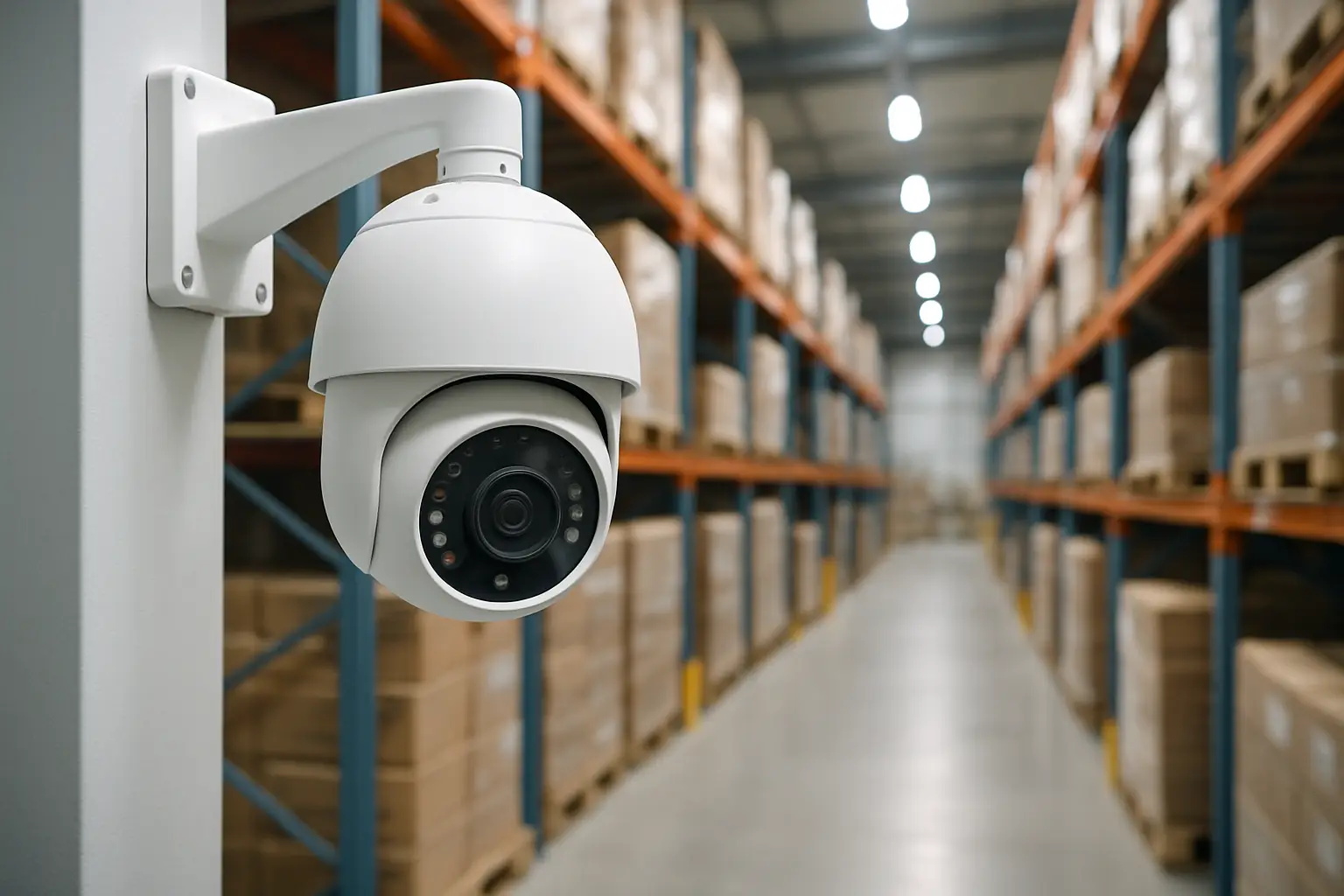
A warehouse is one of the few environments where the camera is fighting three enemies at once: distance, low light, and constant motion. A parking lot camera that looks great at 25 feet can turn into a blur when you need to identify a face at the end of a 180-foot aisle or read a pallet label near a dock door at 2 a.m.
If you are shopping for the best security cameras for warehouses, the “best” part is rarely about a single brand name. It is about choosing the right camera types for the way your building actually works, then pairing that with a recorder and layout that does not leave you guessing when something happens.
What “best” means in a warehouse
Most warehouse owners and managers are trying to solve the same core problems: shrink, after-hours break-ins, dock-door disputes, and safety incidents. The right system gives you usable evidence, not just video.
In practice, “best” means the cameras consistently capture faces at the right height and angle, license plates where it matters, and clear context around loading, staging, and inventory areas. It also means the system is easy enough to use that someone on your team can pull footage quickly without calling in help every time.
Start with the risk map, not the camera spec sheet
Before choosing models, walk the building like someone looking for gaps. Warehouses have predictable choke points.
Your dock doors are usually the highest-risk zone because they combine high-value inventory, frequent activity, and open access. Interior aisles matter because that is where product “walks” or gets damaged, and the argument later becomes “who did what, when.” Exterior corners, fence lines, and roll-up doors are common after-hours targets.
When you map those areas first, the camera selection gets easier because each zone demands a different strength: wide coverage, long-range detail, low-light performance, or the ability to handle harsh lighting changes.
The camera types that work best in warehouses
You can cover a warehouse with a pile of identical cameras, but you will usually end up overpaying in some areas and underperforming in others. A mixed approach is more reliable.
4K fixed turret or dome cameras for close-to-medium coverage
For most interior spaces, a fixed-lens turret (or a vandal-resistant dome in public-facing areas) is the workhorse. In a warehouse, the value of 4K is straightforward: you can digitally zoom without the image turning into a blocky mess.
These are a strong fit for packing stations, time-clock areas, break rooms, interior exits, and the “decision points” where people turn into aisles or approach cage storage. A turret style also tends to handle infrared illumination well, which helps in dim corners.
The trade-off is that fixed cameras only see what you aimed them at on day one. If your layout changes every quarter, placement and lens choice matter even more.
Varifocal cameras when distance and framing are unknown
If you are not sure whether you need a tight view of a specific door or a wider view of an entire lane, choose a varifocal lens. This lets you fine-tune the field of view during installation.
Varifocal cameras are especially useful over dock doors, inside long aisles, and in warehouses that frequently reconfigure racks. You pay more than a fixed lens, but you avoid the common mistake of installing a camera that is “almost right” and then living with it.
PTZ cameras for live response, not as your only coverage
PTZ (pan-tilt-zoom) cameras are tempting because they can look everywhere. In reality, they are best when someone is actively monitoring and can steer the camera.
A PTZ can be valuable in a large yard, a shared staging area, or a high-bay interior where a security lead wants to follow activity in real time. The limitation is simple: when the PTZ is looking left, it is not recording what is happening on the right. For most warehouses, PTZ works best as a “support” camera paired with fixed cameras that never stop watching the critical zones.
LPR cameras for vehicle accountability at entrances
If trailers, delivery vans, and employee vehicles are part of your security picture, license plate recognition (LPR) is worth considering at driveway entrances and exit gates. Standard cameras often fail here because plates need the right shutter speed, angle, and lighting.
LPR is not a magic add-on. It is a purpose-built camera and should be treated as a small project of its own: correct height, straight-on approach, and controlled lighting for night capture.
Low-light and wide dynamic range for dock doors
Dock doors are tricky because the lighting changes constantly. Bright daylight outside and darker interiors can wash out the image or turn people into silhouettes.
Look for strong wide dynamic range (WDR) performance in dock areas and exterior entries. This is one of those specs that matters more than “extra megapixels,” because a sharp silhouette is still not an ID.
Placement that avoids the most common warehouse blind spots
Most warehouse camera failures are not hardware problems. They are viewpoint problems.
Mounting too high is a classic issue. It feels safer, but it often produces top-of-head footage that cannot identify anyone. You want a balance: high enough to reduce tampering, low enough to catch faces and details. For interior areas, angling the camera to capture people’s faces as they approach a point, not as they pass underneath, is usually the difference between “we think it was him” and “we know it was him.”
Long aisles are another trap. A single wide camera at the aisle entrance makes the aisle look covered, but it rarely provides usable detail at the far end. You either need a tighter lens down the aisle, or you cover the aisle with multiple cameras positioned where activity actually happens.
Exterior coverage needs overlap. Corners and fence lines should not be “one camera per side.” Cross-coverage from adjacent angles gives you continuity if someone walks under a blind spot or if headlights blow out one view.
Recorder and storage: don’t let 4K become your problem
4K cameras are only as good as the recorder behind them. In warehouses, we see two practical requirements: reliability and retention.
An NVR (network video recorder) with enough throughput for multiple 4K streams is critical. If the recorder is underpowered, the system may drop frames or struggle during playback, which is exactly when you need it most.
Retention is the other piece. Many warehouse clients want 14 to 30 days, sometimes longer if they deal with high-value goods or delayed claims. Higher resolution and higher frame rates consume more storage, so you often make smart compromises: full quality at docks and cash-handling areas, and slightly lower settings in low-risk zones.
Cloud storage sounds convenient, but warehouses typically generate too much video for it to be cost-effective as the primary method. For most facilities, local recording on an NVR is the stable core, and remote access is for viewing and exporting clips.
Remote access: make it usable for a busy team
Remote access is only helpful if it is simple. Warehouses often have multiple stakeholders: an owner, a GM, maybe a night supervisor, and sometimes an off-site property manager.
Look for a system that supports individual user logins, clear permission levels, and quick export from a phone or laptop. Also plan for the practical reality of signal coverage. If your office Wi-Fi does not reach the far end of the building, your cameras should not depend on it. Hardwired cameras with PoE (Power over Ethernet) are usually the most dependable for warehouses.
A realistic “best camera” setup by zone
If you want a straightforward starting point, most warehouses end up with a mix that looks like this: 4K fixed turrets for interior work areas, varifocal cameras for docks and long views, an LPR camera at the vehicle choke point if plates matter, and a PTZ only where someone will actively use it.
The exact count depends on ceiling height, rack layout, and how many doors you need to cover. The main idea is that each area gets a camera chosen for the job, not a one-size-fits-all purchase.
When professional design matters most
Warehouses punish guesswork. A small change in angle can determine whether you capture a face or a hat brim. The same goes for choosing lenses, deciding where to run cable so it stays protected, and setting recording profiles so you keep footage long enough without wasting storage.
If you want help designing a warehouse system around your layout and priorities in the Sacramento area, StaySafe365 can plan and install a clean, easy-to-use 4K NVR-based setup with remote access and ongoing support: https://staysafe365.us.
A good warehouse camera system should give you confidence, not more work. When you are deciding what’s “best,” choose the option that makes the next incident boring to investigate because the footage is clear, the timeline is complete, and the answer is obvious.