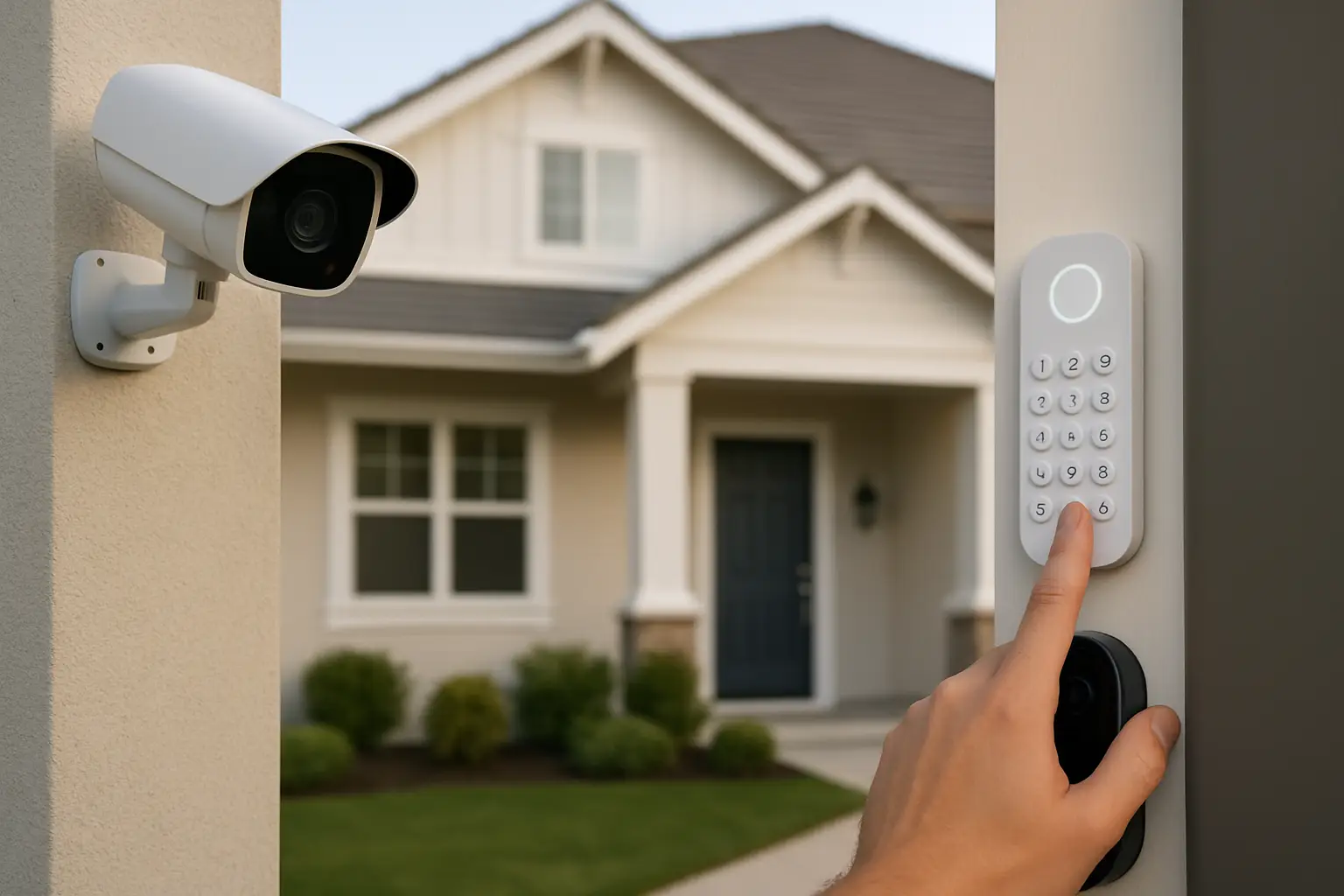
Most homeowners don’t realize they have a “security gap” until something happens - a package disappears off the porch, a side gate is found open, or a car gets checked in the driveway. The frustrating part is that many homes already have some protection: a doorbell camera, a motion light, maybe an alarm sticker in the window. The gap comes from how those pieces do (or don’t) work together across the entire property.
Comprehensive residential security solutions aren’t about turning your home into a fortress. They’re about designing coverage so the most likely paths, blind spots, and everyday routines are accounted for - with systems that are easy to use when you’re tired, busy, or away from home.
What “comprehensive” actually means (and what it doesn’t)
A comprehensive approach is layered. It uses deterrence to reduce the odds of an incident, detection to alert you early, verification so you can quickly tell what’s real, and evidence so you have clear footage if you need it.
What it does not mean is buying the most gadgets. More devices can create more problems: constant notifications, Wi‑Fi dropouts, mismatched apps, and a system that nobody in the household trusts. Comprehensive means planned - based on your layout, your street, your parking situation, and how your home is used day to day.
Start with the risk map of your property
Before choosing hardware, take ten minutes and walk your property as if you were trying to get in unnoticed. Look for the places a person could approach without being seen from the street or from inside.
Most residential break-ins and nuisance activity concentrate around a few predictable zones: front door and porch (especially for packages), driveway and vehicles, side yard gates, back doors, and ground-level windows that are hidden behind fences or landscaping.
A practical “risk map” also includes non-crime issues. If you’ve had repeated false alarms from pets, swaying trees, or busy sidewalks, the right design is just as much about reducing noise as it is about increasing coverage.
Cameras: coverage, clarity, and the truth about 4K
Cameras are often the backbone of comprehensive residential security solutions because they provide verification and evidence. The difference between “I think someone was there” and “I can see a face, a vehicle, and what happened” matters - for peace of mind and for police reports or insurance.
Resolution is part of that, and 4K cameras can be a real upgrade when the camera is placed correctly. But clarity depends just as much on lighting, angle, and lens choice. A high-resolution camera mounted too high or pointed at bright headlights can still produce useless footage. Likewise, a lower resolution camera installed at the right height, aimed to capture a face at an entry point, can outperform a higher spec device with poor placement.
A good camera plan usually mixes viewpoints. Wide views help you understand movement across the yard, while tighter views at gates, doors, and driveway choke points help with identification. If you only install wide-angle cameras, you may see “something happened” without seeing who did it.
Why hardwired recording (NVR) is still the reliable choice
Many homeowners start with Wi‑Fi cameras because they’re accessible and quick to set up. For some situations, they’re enough. But if you’re aiming for truly comprehensive coverage, reliability becomes the deciding factor.
A hardwired camera system recorded on an NVR (network video recorder) generally gives you more consistent uptime and cleaner video. You’re not depending on each camera’s individual Wi‑Fi connection, you can record continuously (not just on motion clips), and you have a central place to manage storage.
There are trade-offs. Hardwired systems require professional installation, and the upfront cost is higher than a few DIY cameras. But the payoff is fewer gaps in recording, better playback when you need it, and simpler long-term maintenance.
Remote access that people actually use
Remote viewing is one of the most valuable features of modern security, but only if it’s set up in a way your household will stick with. The goal is fast answers: “Was that a delivery?” “Did the kids get home?” “Is someone in the driveway?”
The best remote access experience is predictable. That means secure logins, a stable connection, and an app layout that makes sense. It also means setting up user permissions so not everyone needs full admin access. In many homes, one person manages the system, and others just need live view and playback.
Notification settings matter too. A comprehensive system should reduce alert fatigue. It’s better to get fewer, more accurate notifications than to have a phone buzzing all day until you start ignoring it.
Lighting, visibility, and the value of deterrence
Cameras help you see what happened. Deterrence helps reduce how often anything happens in the first place.
Motion-activated lighting around side yards and back doors is one of the simplest ways to change behavior. It makes it harder for someone to work unnoticed and easier for neighbors to see activity. The key is aiming and sensitivity. Poorly placed lights can blind cameras, annoy neighbors, or trigger constantly from passing cars.
Trimmed landscaping is another underrated layer. Overgrown bushes near windows, tall privacy plants by gates, and cluttered side yards create hiding places. A clean line of sight supports both cameras and lighting.
Entry points: locks, gates, and the “easy access” problem
A lot of residential incidents aren’t Hollywood-style break-ins. They’re “try the door” events. Or someone slips through a side gate that doesn’t latch well. Or a garage door is left open for 20 minutes during a busy morning.
Comprehensive residential security solutions include practical hardening: quality deadbolts, reinforced strike plates, and gate hardware that actually closes and latches. If you use smart locks, make sure they fit your household habits. Smart locks are convenient, but they depend on good user management. If codes are shared too widely or never updated, convenience becomes risk.
For garages, consider a camera view that clearly shows the door position and the interior entry door. That combination is often more useful than a single camera pointed vaguely at the driveway.
Alarm monitoring: when it makes sense (and when it doesn’t)
Monitored alarms can be a strong layer, especially for homes with frequent travel, higher-value contents, or repeated activity in the neighborhood. The benefit is response escalation when you’re asleep, in a meeting, or out of town.
But monitoring isn’t automatically “better.” False alarms can be a real issue in some homes, and response policies vary by area. If your system is going to be monitored, it should be designed to reduce false triggers through proper sensor placement and realistic automation rules.
A common balanced approach is using cameras for verification and an alarm for after-hours perimeter or entry detection. That gives you both awareness and an escalation path.
Privacy and compliance: protect your home without overreaching
Home security should make you feel safer, not create tension with neighbors. Keep cameras focused on your property and entry points. Avoid pointing directly into a neighbor’s windows or private areas, and be thoughtful with audio recording features, which can be more sensitive than video.
Inside cameras are another “it depends.” They can help verify alarms and keep an eye on pets or caregivers, but many families prefer to keep recording outside only. If you do use interior coverage, limit it to key areas (like an entry hallway) and make sure everyone in the household understands what is recorded and when.
Putting it together: what a comprehensive plan looks like
A complete security plan ties the layers together so they support each other. Cameras verify what motion lights reveal. Gate and door hardware reduces the number of easy opportunities. Remote access gives you quick confidence. Optional monitoring provides escalation when you can’t respond.
The design should match your property size and layout. A small single-story home on a quiet street may need a few well-placed cameras, lighting in side yards, and a solid front-door setup. A larger lot with multiple access points, detached structures, or a long driveway often needs more coverage and a stronger recording system to avoid blind spots.
This is where professional design pays off. Instead of guessing camera angles and hoping your Wi‑Fi reaches the far corner of the yard, a layout-driven plan can prioritize the right viewpoints and the right recording approach from day one. If you’re in the Sacramento area and want that kind of site-specific coverage with clean installation and hands-on support, StaySafe365 designs and installs camera systems around your actual property, not a one-size-fits-all bundle.
How to choose the right next step
If you’re not sure what to do first, start with one question: where would you be most upset to have an incident you couldn’t verify? For many homeowners, it’s the driveway (vehicles), the porch (packages), or the side gate (backyard access). Build your system outward from that priority, but keep the full property in mind so you don’t create new blind spots.
As you upgrade, aim for fewer platforms, fewer apps, and fewer points of failure. The best security system is the one your household understands and uses consistently, especially at the moments when you’re stressed and need answers quickly.
A helpful way to think about home security is this: you’re not trying to record everything. You’re trying to make the likely paths obvious, the risky areas visible, and your response simple - so your home feels normal to live in, just harder to target.