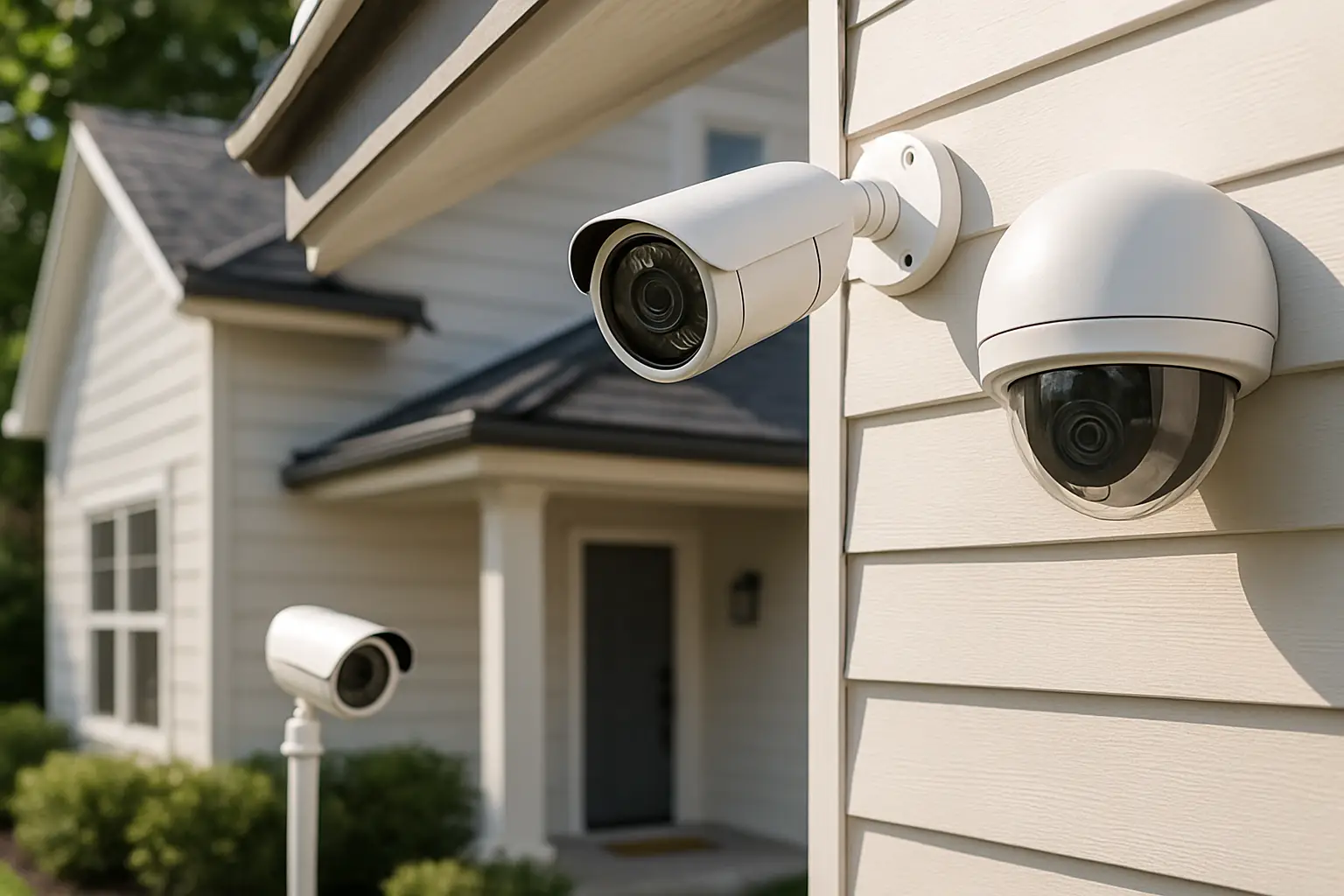
Most camera headaches start the same way: a homeowner buys a kit, mounts a couple of cameras where they seem to make sense, and only later realizes the driveway is still a blur at night or the side gate is a perfect hiding spot.
That is why tailored security camera systems for homes matter. The goal is not “more cameras.” It is the right cameras in the right places, wired and configured cleanly, with footage you can actually use.
What “tailored” really means for home camera systems
A tailored system is designed around your property, not around what came in a box. It accounts for how people approach your home, where they linger, what lighting does at different times of day, and what materials you are mounting to.
For a typical Sacramento-area home, the difference can be as simple as relocating one camera from the front eave to a position that captures faces at the walkway instead of only the tops of heads. Or it can be bigger, like choosing a camera with better low-light performance because your streetlights cast harsh shadows that wash out motion clips.
Customization also includes the “boring” parts that affect reliability: cable routing that avoids exposed runs, weatherproofing, proper PoE switching, stable recording storage, and a viewing setup that is easy enough that you will use it.
Start with your risks, not your shopping cart
Every home has different pressure points. A tailored plan starts with what you are trying to prevent or document.
If package theft is the issue, you care about clear identification at the porch and a camera angle that captures approach and exit routes. If you have had vehicle break-ins, you may care more about covering the driveway, street-facing parking, and any access from alleys or side yards.
It also “depends” on how you want to use the footage. Some homeowners want real-time alerts so they can intervene quickly. Others want reliable recording so if something happens, they can hand usable clips to law enforcement or their insurance company. Both are valid, but they lead to different choices around placement, settings, and how much storage you need.
Coverage planning: where most systems succeed or fail
Good coverage is not about pointing a camera at a wide area and hoping for the best. Wide views are useful for context, but identification usually requires tighter framing.
A strong home layout typically includes a mix: a wider camera for overview of the front yard or backyard, paired with angles that capture the “pinch points” where a person must pass. For many homes, those pinch points are the front walkway, driveway-to-garage path, side gate, and sliding door area.
Height and angle matter more than most people expect. Mounting too high reduces your chance of capturing faces. Mounting too low invites tampering. The best height is often a compromise that still keeps the camera out of easy reach while maintaining an angle that catches facial features, not just hats and hoodies.
Lighting is the other common failure point. A camera aimed directly at a bright porch light or reflective garage door can produce unusable footage at night. Sometimes the fix is repositioning. Sometimes it is selecting a camera with better dynamic range or adjusting the lighting itself. Either way, you want to test views at night, not just at noon.
Camera types and why “4K” is only part of the story
Homeowners hear “4K” and assume it guarantees clarity. Resolution helps, but it is not the only factor that creates a usable clip.
Lens selection determines how much detail you get at a specific distance. A wide lens can show your entire front yard, but faces may still be small. A narrower lens can deliver much better detail on the porch, but it will not cover the full yard. This is why tailored security camera systems for homes often use different lenses in different locations.
Low-light performance varies widely. Some cameras produce sharp daytime video and then fall apart at night, especially with motion. If you need night identification, you want a camera that controls glare well and keeps motion blur under control.
There is also the choice between visible-light night color versus infrared night vision. Color at night can be helpful for identifying clothing or vehicles, but it usually needs some ambient light. Infrared can work in darker areas, but can be affected by reflecting surfaces, spider webs, or rain close to the lens. Again, it depends on the specific spot on your home.
NVR vs cloud: reliability, privacy, and cost trade-offs
For many homeowners, the biggest decision is where video is recorded.
An NVR (network video recorder) keeps footage on-site. It is typically more reliable long-term because it is not dependent on your internet connection to record, and it can support higher-quality streams across multiple cameras. NVR setups also give you more control over storage duration and reduce ongoing subscription costs.
Cloud recording can be convenient, especially for single-camera or small setups, but it relies on consistent upload bandwidth and often compresses video more aggressively. Subscription fees add up over time. And for some homeowners, privacy is a concern - you may not want all footage leaving your property.
A practical middle ground is local recording with remote access. You get dependable storage at home and the ability to check live view and playback from your phone when you are away.
Remote access that homeowners actually use
Remote viewing is one of those features everyone wants, but a lot of systems make it harder than it should be. Tailoring includes setting up the app, permissions, and notifications so they help rather than annoy.
Alert fatigue is real. If you turn on motion alerts everywhere, your phone will buzz all day from trees, shadows, and passing cars. A better approach is to focus alerts on the areas that matter most, tighten motion zones, and use person or vehicle detection when available.
It is also worth thinking about who needs access. Some households want everyone to have the app. Others prefer one admin user with limited access for family members or a property manager. The right setup is the one that fits your home and your comfort level.
Installation details that separate “works today” from “works for years”
Most problems we see with home systems are not because the cameras are bad. They are because the installation cut corners.
Wiring is the biggest one. A clean wired system with Power over Ethernet is dependable, reduces Wi-Fi congestion, and usually provides better video quality. The trade-off is that it takes more planning and professional routing to keep it neat and protected.
Weatherproofing and mounting matter, especially in spots that get direct sun or rain. Proper seals, drip loops, and stable mounting surfaces help prevent moisture intrusion and shaky footage.
Inside the home, the NVR and network components should be placed where they are protected, ventilated, and unlikely to be unplugged accidentally. A surprisingly common issue is recording equipment installed in a cramped cabinet that overheats or loses power.
A few real-world layout examples (and the logic behind them)
A two-story suburban home with an attached garage often benefits from a front overview camera plus a dedicated driveway angle that captures license plates as vehicles enter. If the side yard is accessible, a camera at the side gate can eliminate the blind spot that many homes unintentionally have.
A corner-lot home has different exposure. You may need coverage along the sidewalk-facing side yard and a careful plan to avoid constant triggers from street traffic. In that case, detection zones and camera direction become as important as the camera itself.
Homes with pools or detached structures often need backyard coverage that is more than a wide shot from the back door. A tailored approach might place one camera to watch the back door and another to cover the side path that leads to the yard, because that is how people actually enter.
What transparent pricing should include
Homeowners should be able to understand what they are paying for. Transparent pricing is not just a number - it is clarity about scope.
You should expect an itemized explanation of camera count and type, recording method and storage size, labor for wiring and mounting, and the configuration work that makes the system usable (remote access, notifications, and basic training).
If you are comparing quotes, ask how the installer determined placements. If the answer is “we put one here and one there,” that is not tailoring. A good provider can explain the reasoning in plain language and will adjust based on your priorities.
Ongoing support is part of a tailored system
A home camera system is not a set-it-and-forget-it purchase. Password changes, new phones, router swaps, and app updates happen. So do real-life events like adding a gate, remodeling the exterior, or planting trees that grow into camera views.
Support is what keeps the system useful. That means having someone who can help you pull footage when you need it, fine-tune alerts, or troubleshoot a connectivity issue without turning it into a weeks-long project.
If you are in the Sacramento area and want a system designed around your layout with clean installation and straightforward guidance, [StaySafe365](https://staysafe365.us) builds and installs professional camera systems with an emphasis on coverage planning, reliable NVR recording, and remote access that is easy to live with.
Closing thought
The best home camera system is the one you trust on an ordinary Tuesday night - clear views, predictable alerts, and footage that answers questions quickly when something feels off.