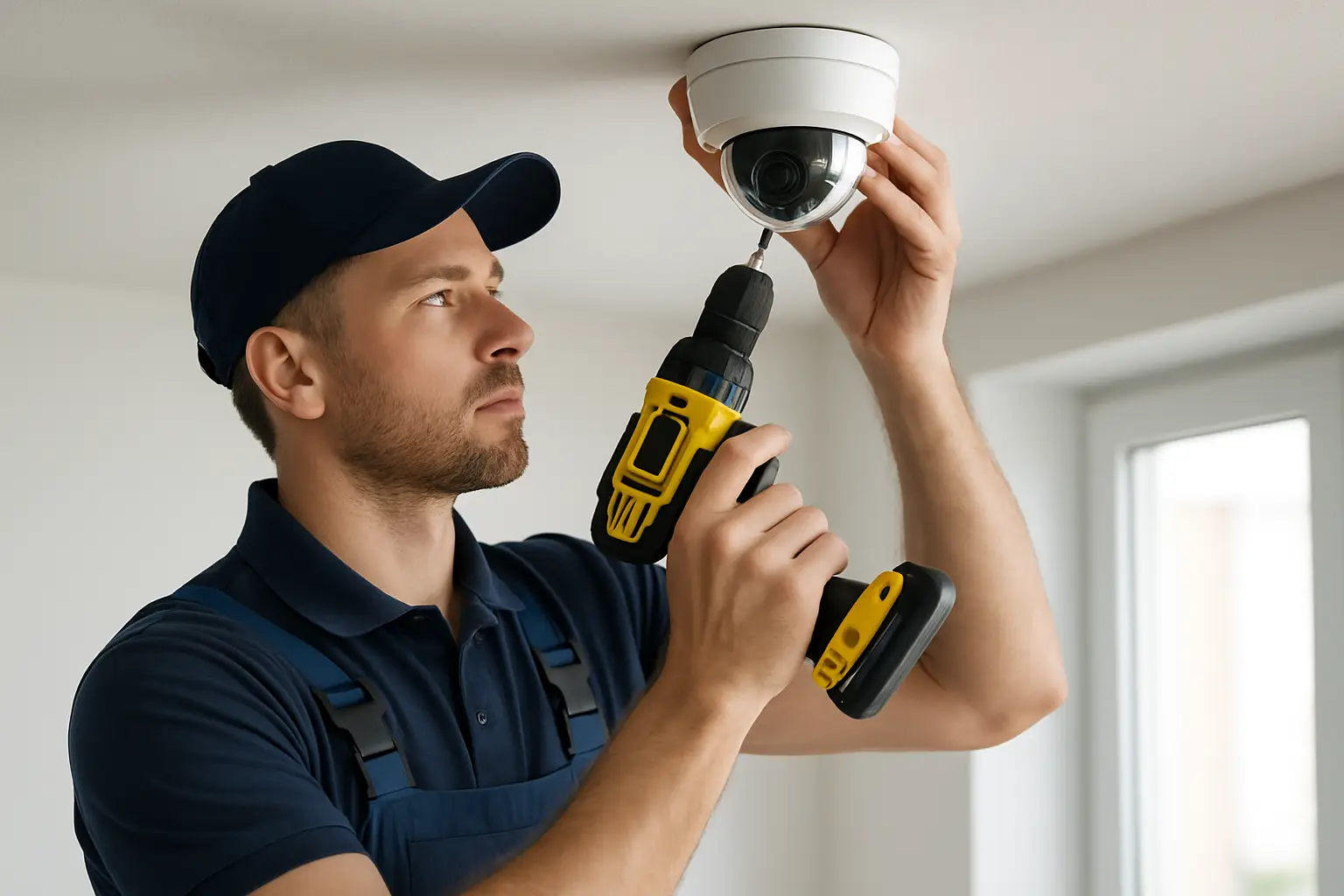
Most camera systems don’t fail because the camera is “bad.” They fail because one camera is aimed a little too high, the night view is washing out on headlights, the recorder is tucked in the wrong place, or the Wi‑Fi drops at the worst time. Then you only discover the problem after you need the footage.
That’s the real value of professional home security camera installation. It’s less about mounting hardware and more about making sure the system works on your property, in your lighting, with your daily routine, and with footage you can actually use.
What “professional” means for a camera install
A professional install is a design-and-build job. You’re paying for decisions that prevent blind spots, reduce false alerts, and keep the system stable long-term.
It starts with a plan for coverage, not a guess at how many cameras you “should” have. It includes correct camera placement for faces and license plates, the right lenses for distance, and recording settings that don’t sacrifice detail. And it means clean, protected wiring and a recorder setup that’s secured and ventilated, not dangling in a closet.
Just as important, professional installation includes testing. Night visibility, motion detection zones, remote access, and playback are checked in real conditions, not assumed.
When professional installation is worth it (and when it depends)
If you want a simple doorbell cam and you’re comfortable managing apps, a DIY setup can be fine. But a lot of Sacramento-area homeowners call us after they’ve tried DIY and still feel exposed.
Professional installation tends to be worth it when you care about evidence-quality footage, not just “something happened.” It’s also a strong fit when you have a two-story home, a long driveway, side yards, a detached garage, or any area where Wi‑Fi is unreliable.
It also depends on your tolerance for maintenance. DIY systems can be convenient, but you may be trading reliability for simplicity. A professionally installed NVR-based system with wired cameras takes more planning up front, but usually delivers steadier recording, better image quality, and fewer surprises.
The installation decisions that make or break your system
Camera installs look simple until you account for angles, lighting, and how people actually move around a property. A good installer focuses on the details that change outcomes.
Placement that captures faces, not just the top of a head
Many cameras get mounted too high because it “feels safer.” The problem is you lose usable facial detail. Pros typically mount at a height that balances tamper resistance with an angle that captures faces as people approach.
We also pay attention to approach paths. If a person naturally walks along a fence line, a camera aimed straight across that path will often capture a better face shot than a camera pointed from behind.
Managing sunlight, shadows, and night glare
Daytime looks can be misleading. Direct sun can create harsh shadows at doorways, and reflective surfaces can cause washout. At night, headlights and streetlights can blow out the image and make motion alerts noisy.
Professional installers use real-world testing to reduce these issues: adjusting angles to avoid direct glare, choosing cameras with better low-light performance, and dialing in settings so you don’t end up with a bright porch light turning people into silhouettes.
Lens choice and field of view
A wide-angle camera can cover a big area, but it may not give you the detail you need at distance. A narrower lens can capture better details down a driveway, but it won’t cover the entire front yard.
This is where “it depends” matters. For many homes, the best result is a mix - wider coverage cameras for situational awareness and tighter views for identification. A professional design accounts for both.
Wiring, weather protection, and clean finishing
Wiring is one of the biggest differences between a quick install and a professional one. Proper cable routing, protected penetrations, and weather-rated sealing prevent water intrusion, pests, and future signal issues.
Clean finishing also matters for homeowners who care about appearance. A professional install should look intentional: cables hidden where possible, equipment mounted neatly, and exterior runs protected.
Why many homeowners choose a wired NVR system
You’ll see two common paths: Wi‑Fi cameras that record to the cloud or local storage, and wired cameras recording to an NVR (Network Video Recorder). Both can work, but they behave differently.
Wired NVR systems are popular for homeowners who want consistent recording and higher image quality, including 4K. Because the video travels over cable, you’re not depending on Wi‑Fi strength at the edge of your property. That matters for driveways, backyards, and side gates where signal can be weak.
The trade-off is that wired systems require more planning and installation work. You need clean cable paths and a secure spot for the recorder. The payoff is typically better reliability, smoother playback, and fewer missed events.
Remote access that’s actually reliable
Remote viewing is one of the most requested features, and it’s also one of the most common pain points.
A professional installer will confirm the system can be viewed from your phone on cellular data and on your home network. They’ll also make sure your recorder and network are set up safely. If your router is in a tough spot, you may need a simple network improvement so remote access works without buffering.
The goal is for you to open the app and quickly find what you need - live view, motion events, and recorded playback - without fighting the interface.
What to expect during a professional home security camera installation
A professional process should feel organized and transparent. You should know what’s happening, where cameras are going, and what the trade-offs are.
1) Walkthrough and coverage planning
The first step is a property walkthrough. This is where a good installer asks practical questions: Which doors do you use most? Where do deliveries get dropped? Any previous incidents? Are there dark corners or problem areas?
From there, camera locations are planned around real threats and real movement, not just “four corners.”
2) Camera selection and system sizing
This includes choosing camera types and resolution, deciding how many days of recording you want, and sizing the NVR and storage accordingly. If 4K is the goal, storage planning matters because higher resolution means more data.
3) Installation and cable routing
Cables are run, cameras are mounted, and the recorder is installed in a secure location. A professional should keep the work area clean and minimize visible wiring.
4) Configuration, testing, and user setup
The last step is the one many DIY installs skip. Motion zones are adjusted, night performance is checked, and remote access is set up. You should also get a quick walkthrough on how to search footage, export video, and adjust basic settings.
If you’re in the Sacramento area and want a system designed around your layout with clean wiring, 4K options, and ongoing help using the system, StaySafe365 focuses on custom installs that prioritize coverage and reliability, not just equipment.
Cost factors: why quotes can look very different
Camera installation pricing can vary widely, and it’s not always obvious why. Two systems with the same number of cameras can have very different labor time and performance.
A few factors drive cost: the difficulty of running cable in your home, whether cameras need to reach detached structures, the type of exterior surfaces, the quality and resolution of cameras, and how much recording storage you want.
There’s also a difference between “installed” and “finished.” A lower quote might not include detailed configuration, motion tuning, or cleanup. A higher quote often reflects more time spent on design, cable routing, and testing so you don’t end up with blind spots.
Common mistakes that lead to regret
Most regrets come from systems that technically “work” but don’t produce useful footage.
One mistake is placing cameras for coverage but not for identification. Another is ignoring night performance, then realizing the image is too dark or too blown out to see details. We also see systems where the recorder is easy to steal, the storage is too small to keep footage long enough, or remote access is unreliable because the home network wasn’t considered.
If you’re investing in cameras for peace of mind, it’s worth making sure the system is built to answer the questions you’ll have later: Who was it? Which direction did they come from? What vehicle was that?
How to prepare for your installation day
You don’t need to be technical to make installation smoother. If you know which areas matter most to you, point them out during the walkthrough. If you have a preferred spot for the recorder, mention it, and be open to feedback if it’s not secure or practical.
It also helps to think about lighting. If you plan to add a brighter porch light or motion light, tell your installer. Small changes in lighting can improve camera performance, but the camera angles and settings should match the final setup.
A good camera system should feel like it belongs to your property: coverage where you need it, footage you can actually use, and an app experience that doesn’t require постоян troubleshooting. The best time to get that right is before the first hole is drilled, when you can still choose the plan that fits how you live and work.