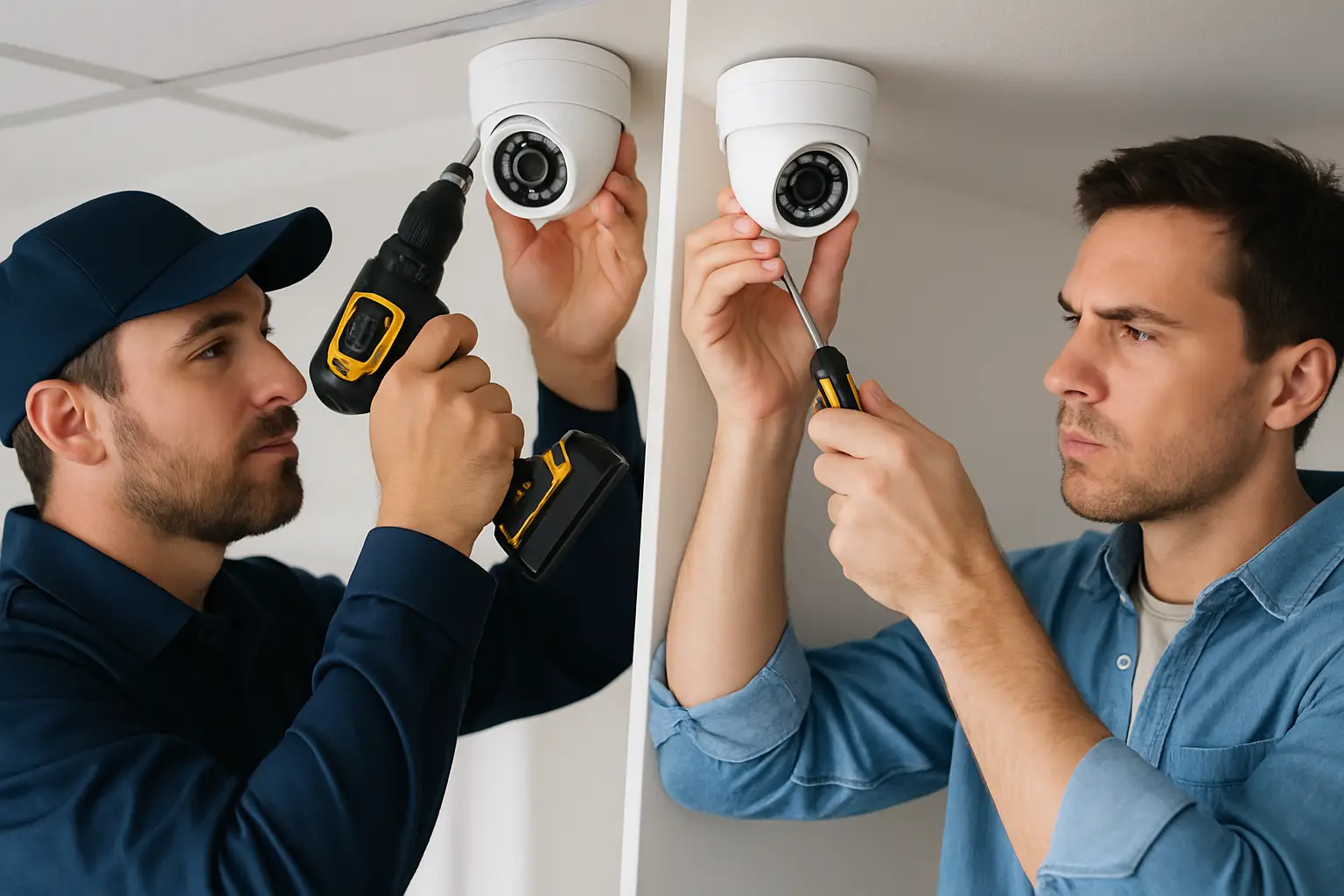
That moment when you realize your side gate is wide open on the camera feed - but the camera never actually showed the gate latch - is when “good enough” security starts to feel expensive.
Most people don’t regret buying cameras. They regret coverage gaps, messy wiring, unreliable playback, and an app that works fine until they really need it. That’s the real decision behind professional vs DIY security installation. It’s not just who mounts the cameras. It’s whether the finished system consistently captures the details that matter, day or night, and whether you can trust it months from now.
What you’re really deciding in professional vs DIY security installation
A security system is a chain. Cameras, cabling, recorder, power, network, storage, and settings all have to hold. DIY can absolutely work when the property is simple, the expectations are realistic, and you’re willing to learn.
Professional installation tends to win when the property has more variables: multiple entry points, long cable runs, tricky lighting, a need for clean routing, or higher stakes like employee safety and liability. It also matters when you want a system designed around your layout, not around what happened to come in the box.
This choice is less about skill and more about trade-offs: time vs certainty, upfront savings vs long-term reliability, and convenience vs control.
DIY security installation: where it shines, and where it surprises you
DIY systems have come a long way. For many homeowners, a well-chosen kit can cover basic needs quickly. Wireless cameras and app-first setups can be installed in an afternoon, and the sense of control feels great.
DIY shines when you have a small, straightforward space and a clear goal, like monitoring a front porch or driveway with one or two cameras. It can also work well for renters or anyone who needs a temporary setup without running cables through walls or attic spaces.
The surprise comes from the details most product pages gloss over.
Coverage is harder than buying “enough” cameras
People often assume more cameras equals better coverage. In practice, placement matters more. A camera mounted too high can miss faces. A camera aimed at a bright sky can turn a person into a silhouette. A wide angle can look impressive but deliver softer details right where you need clarity.
A DIY install can leave blind spots around corners, side yards, or back doors because the camera is mounted where it was easiest, not where it performs best.
Wi-Fi and power can become the bottleneck
Wireless cameras still need power, and batteries introduce maintenance. If your Wi-Fi drops or your router gets overloaded, video can stutter or fail. In a business setting, shared networks and metal construction can make Wi-Fi even less predictable.
A common DIY pain point is thinking the camera is “offline” when the real issue is signal strength, router placement, or too many devices competing for bandwidth.
Recording and playback are often the deciding factor
Cameras are only half the story. If your system records inconsistently, overwrites too quickly, or makes it hard to find footage, you lose time when you need answers fast.
DIY setups can do recording well, but you have to choose the right storage approach, set retention expectations, and configure motion detection carefully. Without that tuning, you get either missed events or a flood of useless alerts.
Professional installation: what you’re paying for besides labor
A professional install should feel less like “mounting cameras” and more like designing a system that works in your specific environment. The value is in the decisions made before the first hole is drilled.
A site-specific camera plan
A solid installer starts by walking the property with you. They’ll look at entry points, typical paths of travel, lighting at different times of day, and areas you care about most.
For a Sacramento home, that might mean balancing coverage between the front door, garage, driveway, side yard, and backyard gate. For a small business, it might mean the register area, customer entrance, stock room, and parking lot - with camera angles that respect privacy while still protecting assets.
Clean cabling and stable performance
Wired systems with an NVR (network video recorder) are popular because they’re stable, centralized, and built for continuous recording. The difference in a professional install is how the cables are routed, protected, and terminated.
Clean routing is not cosmetic. It reduces the chance of intermittent connections, moisture intrusion, and accidental damage. It also makes future service easier because everything is labeled and accessible.
Correct settings: the “invisible” part that makes footage usable
Even great hardware can produce mediocre results with default settings. A professional should adjust exposure, motion zones, recording schedules, compression settings, and notifications so you get useful clips without constant false alarms.
This is especially important with 4K systems. Higher resolution helps, but only if the camera is positioned and configured to capture detail where it counts.
Training and ongoing support
Many people can install a camera. Fewer people stick around to make sure you know how to export footage, manage users, set up remote access correctly, and troubleshoot basic issues without stress.
Support matters more than most people expect. If you have an incident six months from now, you don’t want to relearn your system under pressure.
Cost: upfront price vs total cost of ownership
DIY usually wins on upfront cost. You can buy a kit, mount it yourself, and avoid labor charges. If you already have tools and you’re comfortable troubleshooting, you can stretch your budget further.
Professional installation typically costs more at the start, especially for multi-camera wired systems. But the “total cost” picture changes when you factor in your time, the cost of redoing mistakes, and the possibility of missing key footage.
For businesses, reliability can be the most expensive line item. If footage is needed for a break-in, a customer incident, or an employee dispute, a system that doesn’t record clearly can cost far more than the install ever would.
A practical decision guide for homes and businesses
If you’re on the fence, focus on a few real-world questions.
How complex is your property?
A single-story home with easy attic access is very different from a two-story property with vaulted ceilings, detached garages, or long distances to cover. Commercial properties can add challenges like drop ceilings, concrete walls, shared network closets, and after-hours access constraints.
The more complex the layout, the more professional planning helps.
What do you need the video to do?
If you want general awareness, DIY may be enough. If you need identification, license plates, or clear evidence for police or insurance, the bar is higher. You’ll care more about camera height, lens choice, night performance, and consistent recording.
How much time can you realistically invest?
DIY isn’t just installation day. It’s researching equipment, testing locations, adjusting settings, managing updates, and maintaining the system. Some people enjoy that. Others just want it handled correctly once.
How important is a clean, permanent install?
Visible wires, exposed junctions, and improvised mounts can invite tampering and weather damage. If you care about long-term durability and a professional finish, that’s a strong argument for hiring it out.
Where Sacramento-area properties tend to trip up
Local conditions matter. Bright sun, deep shade, and reflective surfaces can create harsh contrast. Night lighting varies a lot from neighborhood to neighborhood. Small businesses often have parking lots with uneven lighting and hot spots from streetlights.
These are solvable problems, but they require intentional camera placement and settings. A camera pointed the wrong direction can look fine at noon and fail at night. A camera mounted too high can cover the whole lot but still miss the face you needed.
A balanced approach: DIY some, professional the rest
Sometimes the best answer is mixed. You might DIY interior cameras or a basic doorbell camera, then hire a professional for exterior wired cameras, NVR recording, and clean cable runs. Or you might start with DIY to learn what you care about, then upgrade once you’ve experienced the limitations.
If you go hybrid, make sure the systems don’t fight each other. Different apps, separate recordings, and mismatched quality can create confusion when you need footage quickly.
If you choose a professional, what to ask before you schedule
A good installer should be comfortable explaining the plan in plain language. Ask how they decide camera locations, what recording retention you’ll get, how remote access is secured, and what support looks like after installation.
You should also ask what the finished install will look like - cable routing, hardware placement, and how they handle repairs or adjustments if a camera needs to be moved.
If you’re in the Sacramento area and want a system designed around your actual layout with clean wiring, reliable NVR recording, and help learning the setup afterward, StaySafe365 can walk you through options at https://staysafe365.us.
Closing thought: the best security system is the one you trust enough to stop thinking about it - because you know it will capture what matters when you are not watching.